Put the two paths into words
Before drawing, write down the two options you are considering. For example: “Hold an event in person next month” or “Meet online instead.” Specific choices make it easier to connect the cards with your life.
Think about what matters most this time. Do you want to meet more people, or keep the preparation manageable? How much time and money would you like to spend? Those thoughts help you recognize what attracts you to each path.
If all you know is “I want something to change,” try the three-card situation, action, outcome spread first and explore which part you want to change.
The five-card decision layout
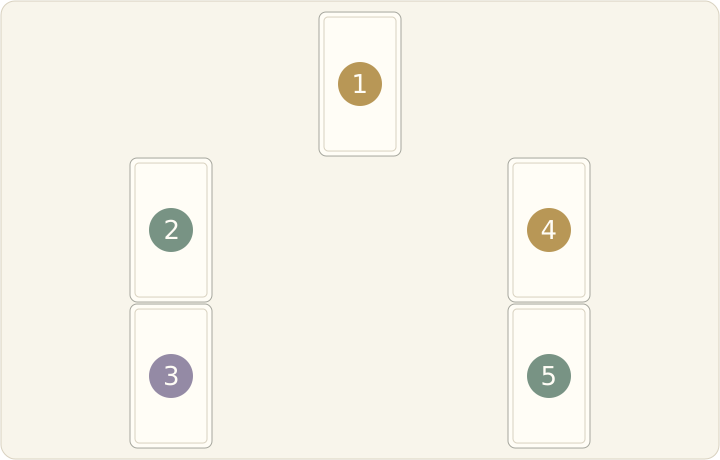
| Position | Ask yourself |
|---|---|
| 1 · Core need | What do I most want to take care of in this decision? |
| 2 · A’s possible benefit | What draws me to A? |
| 3 · A’s cost and demands | What effort would A take, and what would I give up? |
| 4 · B’s possible benefit | What draws me to B? |
| 5 · B’s cost and demands | What effort would B take, and what would I give up? |
Both paths answer the same questions, leaving room for their appeal and their demands. Staying where you are can also be a path: continuing for a month or waiting until next term gives that choice a shape.
Where to begin after drawing
- Keep the two paths in view. Write A and B, shuffle and lay out five cards in the numbered order. You can start with upright cards only.
- Begin with card 1. What need comes to mind? A card about balance might help you realize you want to feel less stretched.
- Compare the appeal of each path. Read cards 2 and 4 together. Which benefit do you look forward to more, and why?
- Look at the effort involved. Cards 3 and 5 might bring up time, money, something to learn or a difficult period of adjustment.
- Write down your thoughts. What is already clear? What would you like to ask someone or look into? Leave yourself one small thing to do.
For an unfamiliar card, browse the card library and return to your choice. The same card can bring different things to your attention in different positions.
A reading example: a book swap in person or online?
Suppose you want to arrange a book swap with your neighbors. Meeting in person would give everyone time to talk; meeting online might save you finding a venue. You have four hours to prepare, want a friendly gathering and hope to keep the cost modest. We have chosen five upright cards to illustrate the reading.
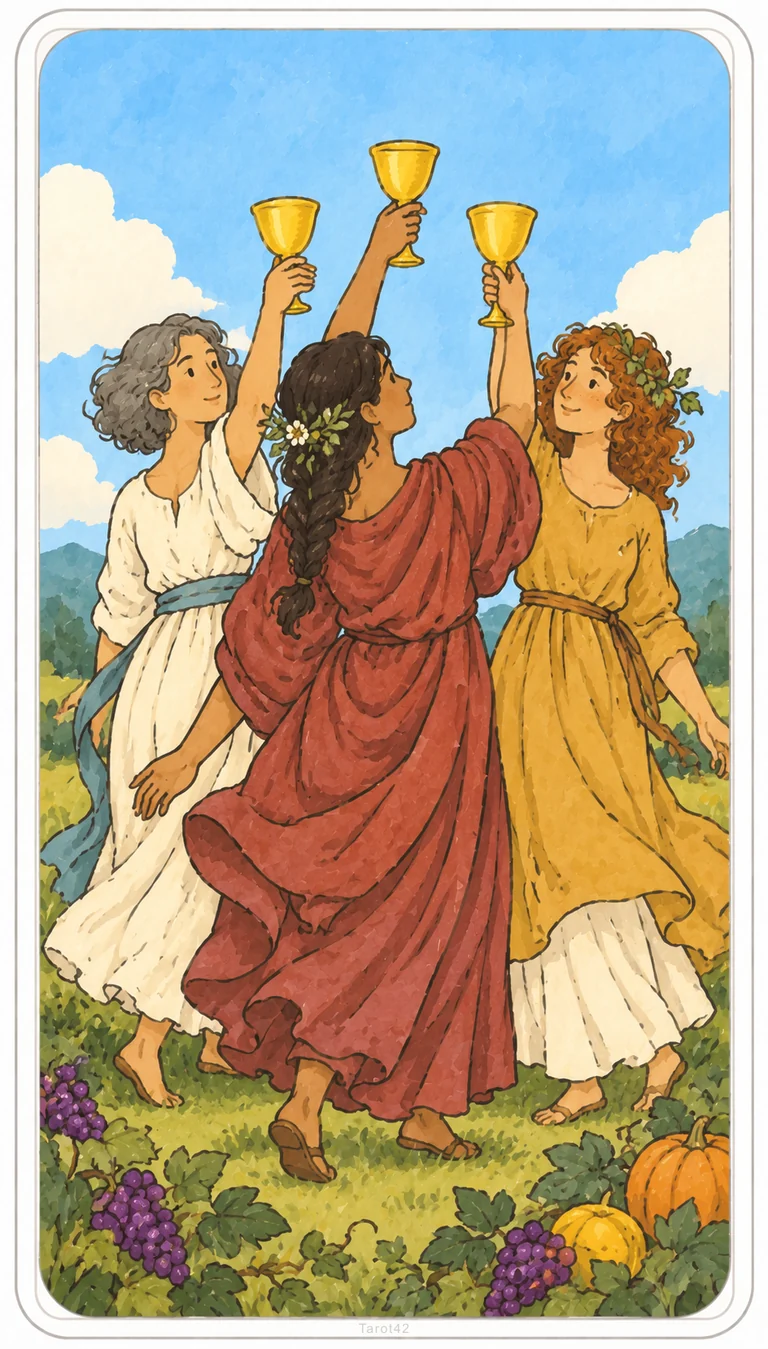
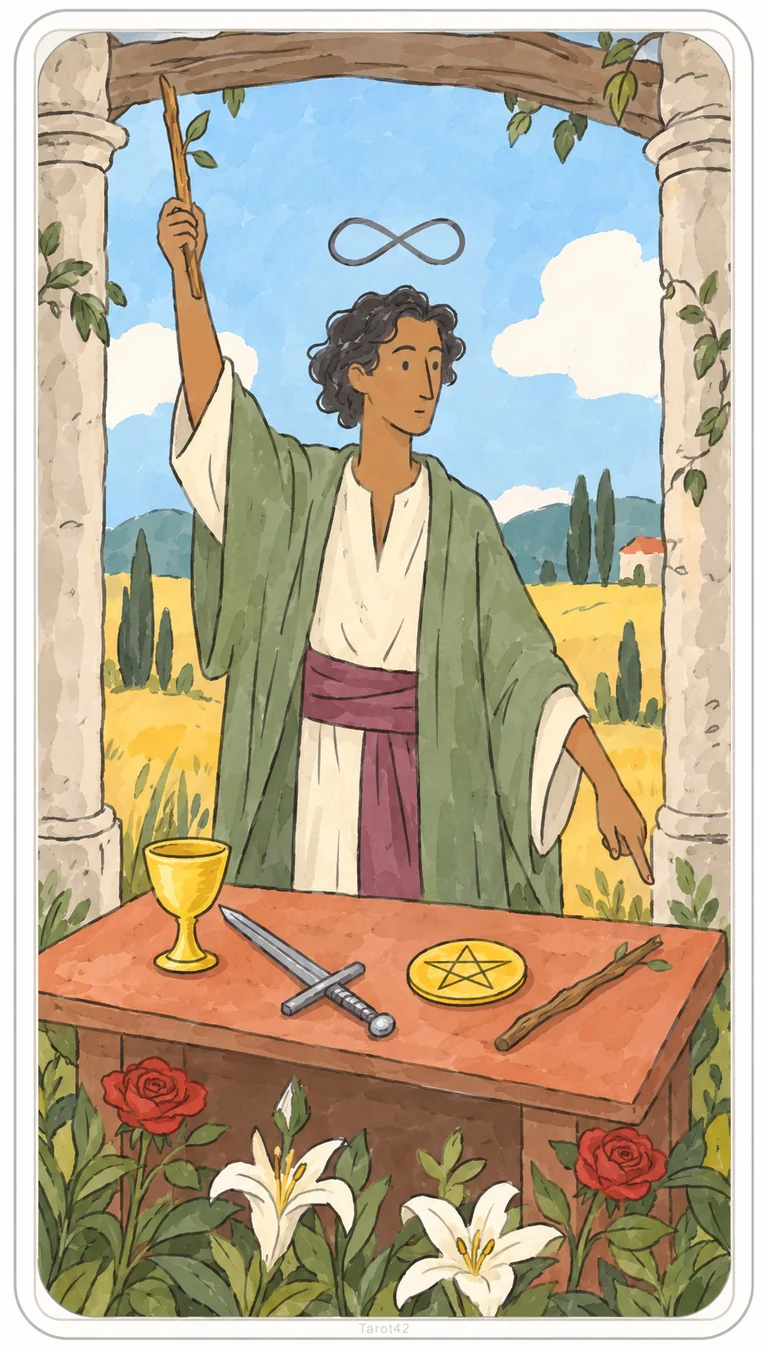
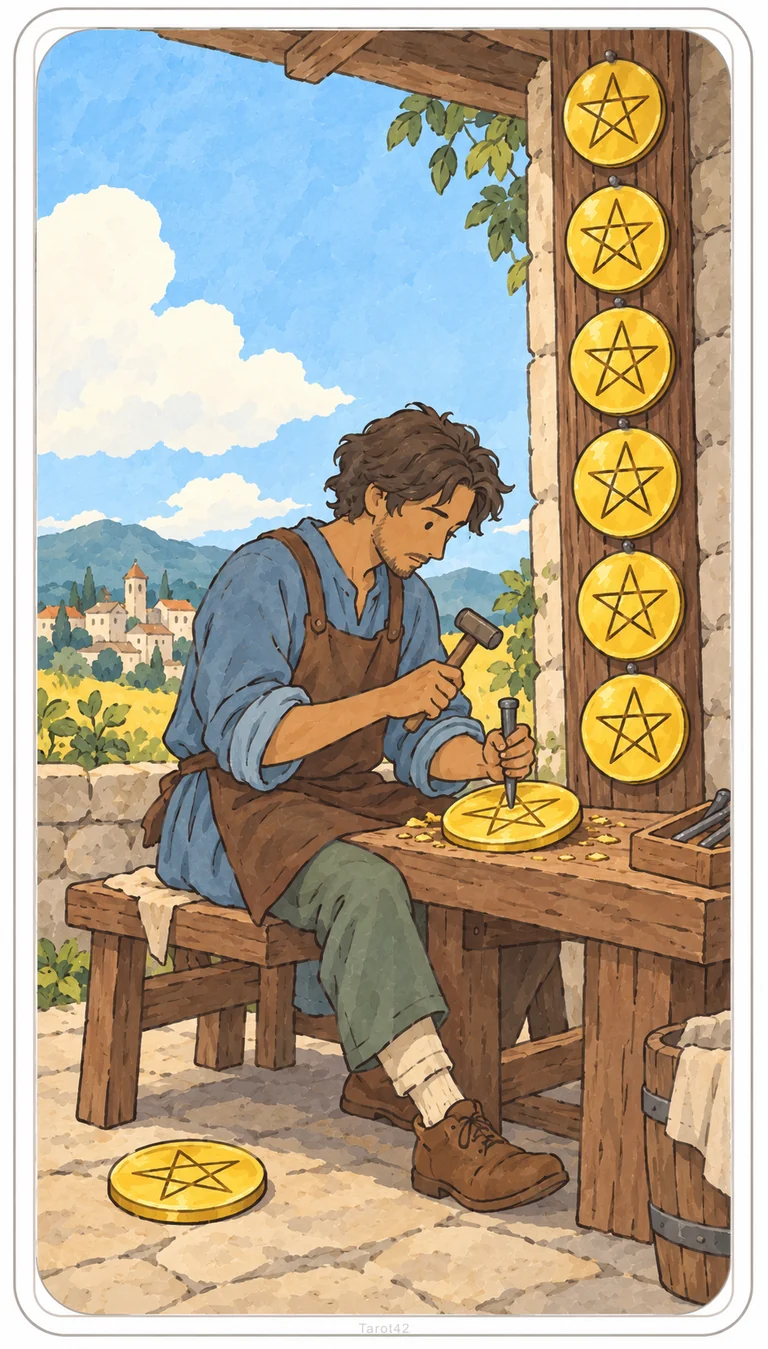
| Position | Card | What it might bring to mind |
|---|---|---|
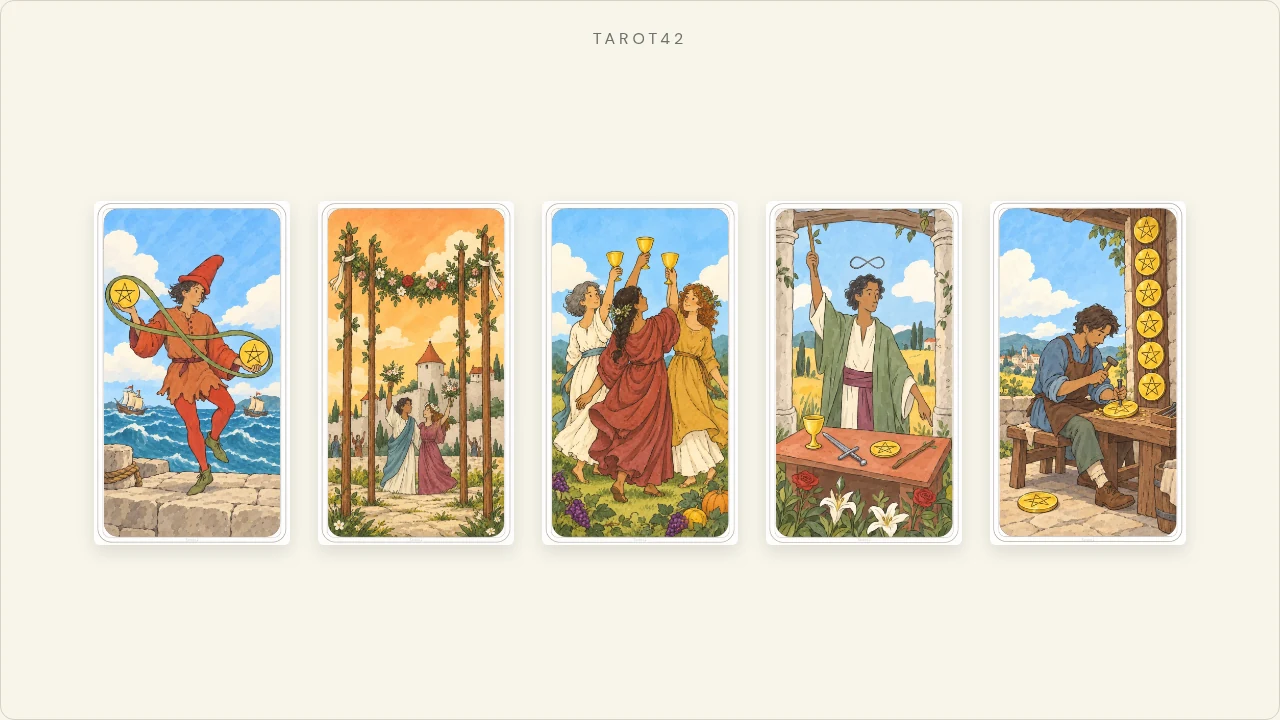
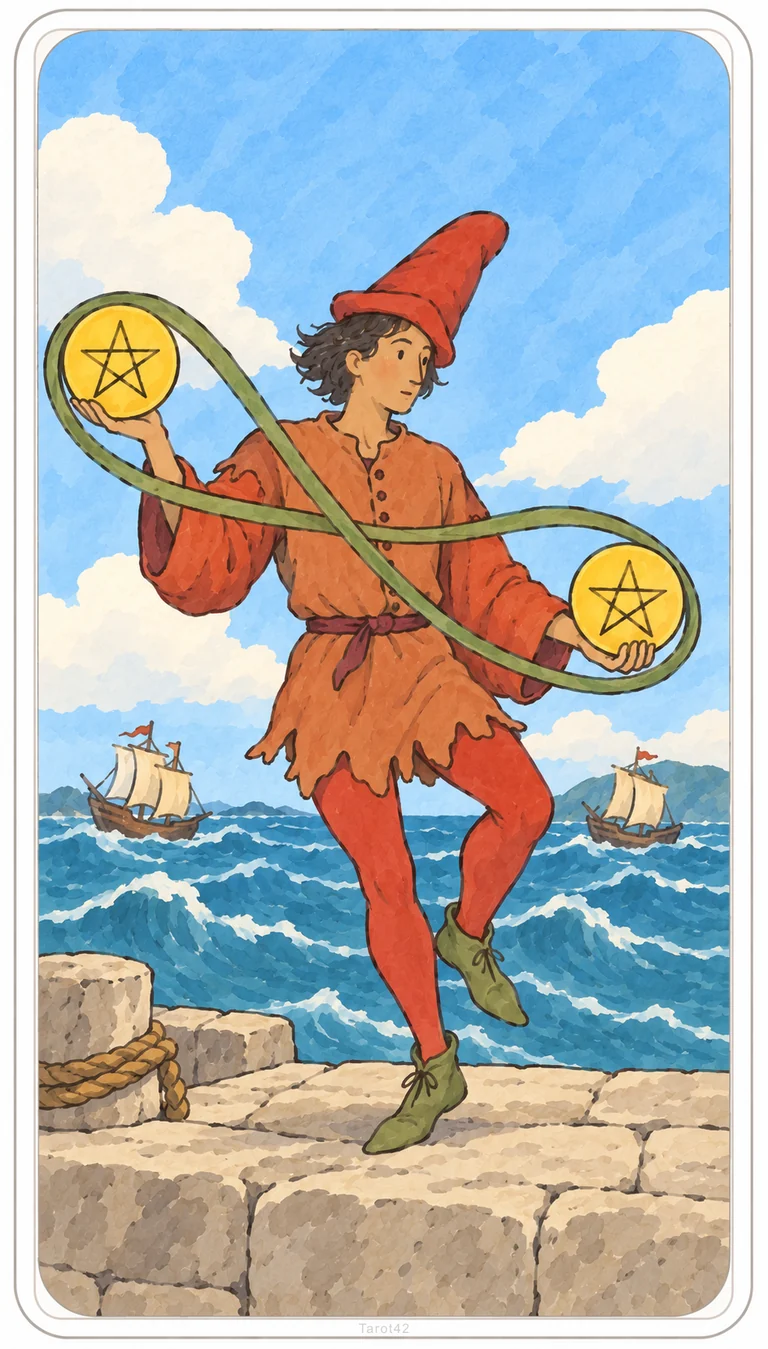
| 1 · Core need | Two of Pentacles | You want the event to happen while keeping up with daily life. Manageable preparation matters. |
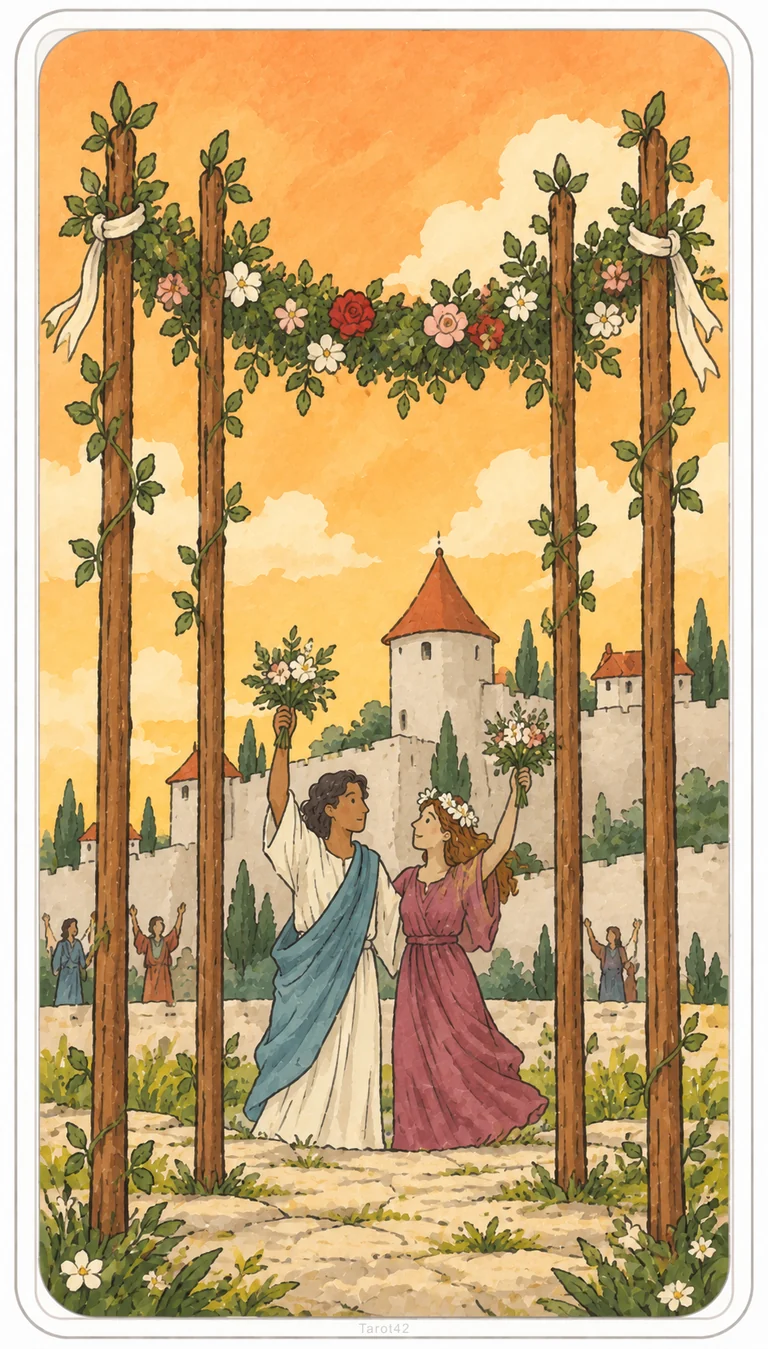
| 2 · A’s benefit | Four of Wands | A place to gather lets people talk about books and get to know their neighbors. |
| 3 · A’s cost | Three of Cups | A gathering needs invitations, a time that works and someone to host. Bringing people together takes effort. |
| 4 · B’s benefit | The Magician | You already have tools and ideas. A familiar platform could help you get the event going. |
| 5 · B’s cost | Eight of Pentacles | Online preparation includes testing equipment, learning the controls and planning how to show and exchange books. |
Together, both paths have something to look forward to. The Four of Wands suggests the warmth of meeting; the Magician brings your existing resources to mind. The Three of Cups and Eight of Pentacles describe two kinds of work: organizing people and preparing tools.
Return to the Two of Pentacles: which kind of work are you willing and able to take on right now?
| Meeting in person | Meeting online |
|---|---|
| Is the community room available, and what does it cost? | Is everyone comfortable with the platform? |
| Would a friend help organize? | How long would a test take, and how would books change hands? |
With friends helping, the Three of Cups can become shared effort. If the platform is familiar, the Eight of Pentacles may involve less preparation than you thought. Ask about the room, talk to a couple of friends and test the equipment. The choice may become easier with those answers.
Why can a positive card appear as a cost?
Enjoying something and putting effort into it can happen together. The Three of Cups is a happy gathering, and someone still needs to invite people and tidy the room. The position brings another part of the card’s theme into view.
A difficult-looking card in a benefit position might help you notice why a path is worth trying: perhaps it means facing something you have postponed for a long time. If a connection does not come, leave it open for now.
Consider which benefit matters to you and which demand fits your life. With reversals, begin by asking where something feels blocked or overdone.
Choose one small thing to do next
Put the thought that stayed with you into a sentence: “I prefer A because…, but I still need to find out….” Then ask someone, try a small version or work out the cost.
You may also discover a third approach: make the event smaller, change the date or organize it with someone. Considering two paths can help you notice another way forward.
Keep a record of this choice
Use the decision spread worksheet (PDF) to note the paths, cards and reasons that mattered to you. Looking back later may help you understand what made the choice difficult at the time.
Common questions about decision spreads
What if both paths look good, or both look difficult?
That is common. Both choices can have appeal and complications. Return to card 1, consider what matters most and look at which demands fit your life now.
Can I compare three options?
Write all three on paper using the same questions. You may set one aside because of time or cost. Bring the two you find hardest to choose between into this spread.
Can I use this to think about staying in or leaving a relationship?
Begin by listening to your needs: how you want to relate, what has been exhausting and what effort you are willing to make towards change. To explore your interaction first, begin with the love spreads.
Further reading
For other approaches, see Labyrinthos’ five-card decision spread or Tarot Verdict’s seven-card version.