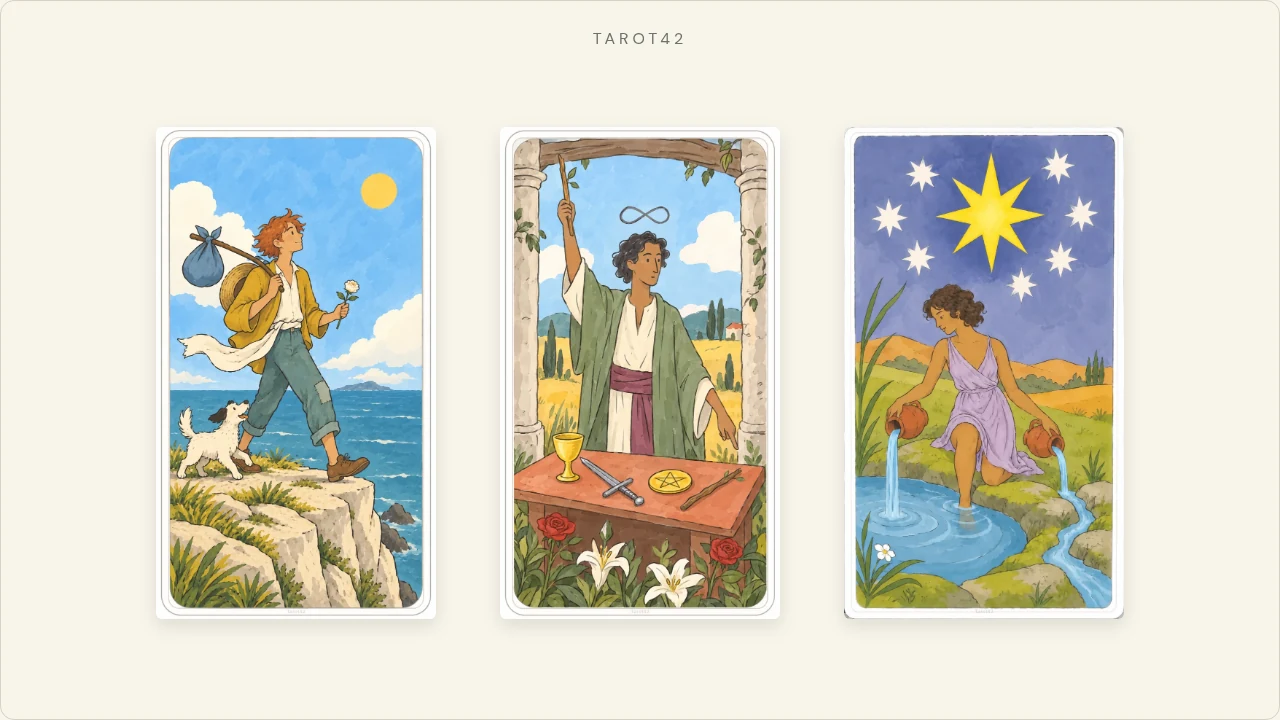
What is a tarot spread?
A spread is an arrangement in which each card looks at a different part of a question. One familiar example is three cards in a row for past, present and future.
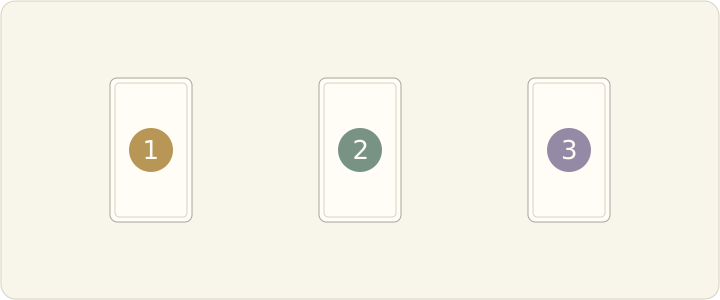
The same row can also mean situation, action and outcome. Changing the positions changes the angle: a card about rest in the past position might bring an earlier pause to mind; in the action position, it might suggest taking a break now.
A simple set of positions is easier to begin with than a table full of cards. You can look up an unfamiliar card in the card library at any time.
How to choose a spread for your question
Think about what you most want to understand. One card can offer a small reminder for today. Three can help you explore why something feels stuck and what you might do next. Add more cards as you find you want to explore more parts of the question.
| What you want to explore | Try this | Cards | A good place to start |
|---|---|---|---|
| Something to notice today | One card | 1 | A first reading or a few quiet minutes |
| How a situation reached this point | Past, present, future | 3 | Beginners |
| What you could do next | Situation, action, outcome | 3 | Beginners |
| How you feel today | Energy, focus, release | 3 | Beginners |
| A few more angles on one issue | Five-card cross or seven-card horseshoe | 5–7 | Once three cards feel familiar |
| An issue with a history, hopes and concerns | Celtic Cross | 10 | When you have time for a longer reading |
| A record of the year | One card per month, plus an optional yearly theme | 12 or 13 | A reading to revisit each month |
More cards give you more angles to explore. Leave yourself enough time to read and think about them; you do not have to fill the table.
Make a broad question a little more specific
“What will my future be like?” gives you a lot to cover. “How could I talk to my friend about this issue this week?” offers a starting point: what matters to you, why it is hard to speak and how you might begin.
Your question can sound like something you would actually say. Plain words are enough.
Tarot layouts from one card to ten
One card: a small reminder
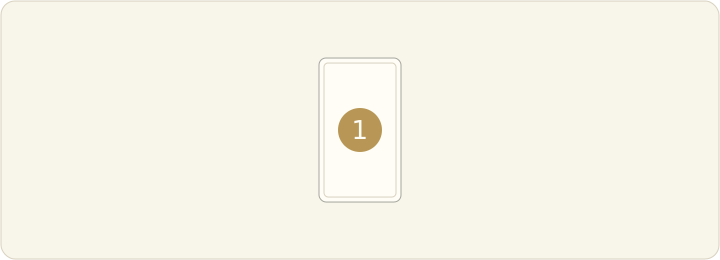
Notice what the image first brings to mind. Perhaps it is a task you have put off, or some rest you have been missing. Staying with that one thought can be a reading in itself. For a small question with a yes or no answer, you can also explore how Yes/No tarot works.
Three cards: connect a few perspectives
Three cards can read like a short story. Look at what the first introduces, how it leads into the second and what the third adds. The three-card guide has four common approaches and an example to follow.
Five cards: explore different parts of one issue
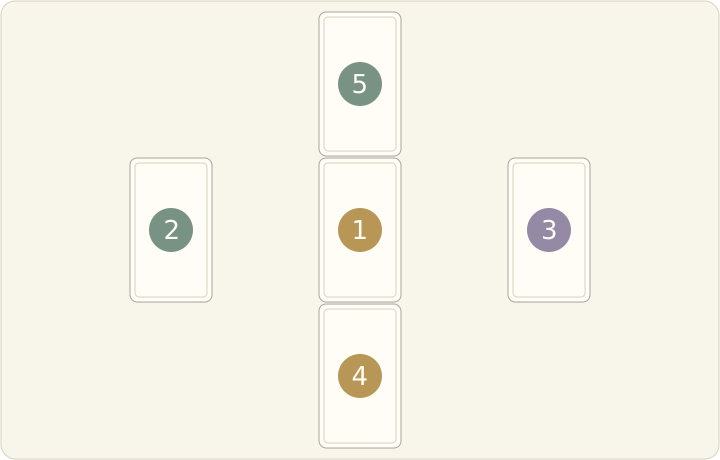
Alongside the situation itself, five cards give you room to consider what supports you and what makes things harder. With that context, the next step may become easier to picture.
You can also use five cards for a relationship or a choice, with questions for each position that fit the subject.
Seven cards: follow the horseshoe
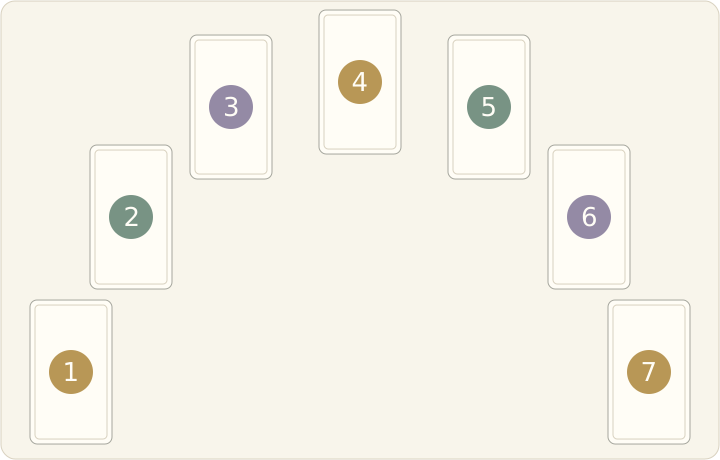
Read from the past on the left, through the present, your attitude and your surroundings, towards a possible development on the right. The overlooked influence can prompt you to remember something you have left out of consideration. At the end, return to the advice and see what it brings to mind.
Ten cards: the Celtic Cross
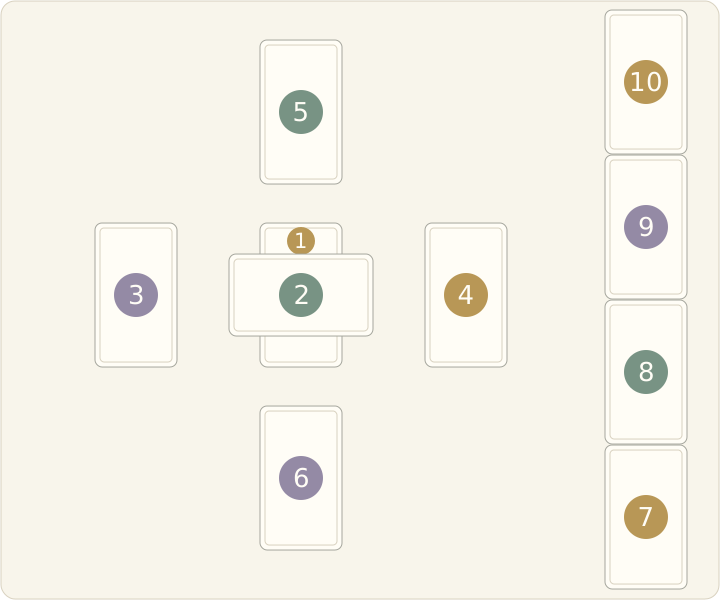
The Celtic Cross leaves room for an issue you have thought about for a while: its history, your expectations and your worries. Begin with the situation and challenge in the middle, then explore how the past connects with the present and how your outlook meets the world around you.
There are several versions, with different position orders. In Waite’s version, for example, card three is above and card four below. Follow one diagram for your reading; you can compare other approaches as you get familiar with it.
Twelve or more cards: a monthly record
Begin at New Year or on your birthday, with one card for each month and an optional card for the year’s theme. Write down your thoughts and return each month. Over time, it can become an interesting record of everyday life.
Questions about love, work and choices
You can use the same arrangement for different subjects. Start with something in your own life you would like to spend time with.
- Love: “What am I hoping for in this connection, and what have I left unsaid?” The love spreads begin with your feelings.
- Work: “What has been tiring me out, and which of my skills could help?” Explore the situation and the resources you already have.
- A choice: “What draws me to each path?” The decision spread puts the benefits and effort side by side.
- Today: “How am I feeling, what deserves care and what could I let go of?” Try Daily Tarot.
- A personal journal: At a new moon, full moon or any moment you want to pause, try “keep, release, nurture” and notice what has been changing.
Ready to lay out the cards?
- Write your question. Use a sentence that sounds like you.
- Choose a spread. Read what each position asks. You can begin with upright cards only.
- Shuffle and draw the cards you need. Place them in the order shown in the diagram.
- Look at the image, then the meaning. What detail catches your eye? What does it bring to mind in this position?
- Connect the cards in a few sentences. Notice how they respond to one another and leave yourself one small thing to try.
It is normal to get stuck at first. Follow the complete three-card example, then try a question of your own.
How to read several cards together
Look for cards that echo each other, or seem to pull in different directions. One may suggest rest while another encourages learning. Together, they might express wanting to begin while needing to leave yourself some breathing room.
Repeated suits offer another starting point. Cups often bring feelings to mind, Swords thoughts and communication, Wands enthusiasm and action, and Pentacles time, money and daily arrangements.
Major Arcana can suggest larger themes in your life, while Minor Arcana often bring you to a specific everyday moment. Together, they can help you explore why something matters and what you might do today.
Keep a note of anything you cannot yet connect. Return in a few days, or when something has changed. An image that puzzled you may begin to make more sense.
Common questions about tarot spreads
Which spread should a beginner learn first?
One or three cards are both good places to begin. Past, present, future is easy to remember; situation, action, outcome works well when you want to explore a next step.
Do I need all 78 cards?
You can practice with the Major Arcana you already know. Add the other cards as you learn them and you will find more details that connect with daily life.
Can I make my own spread?
Yes. Begin with a question and give two or three things you care about their own positions. For a trip, you might choose “hopes, concerns, preparation.” Keep it simple enough to read comfortably.
Do I have to read reversals?
You can start with upright cards and try reversals later. Decide before drawing so you can give your attention to the cards.
Should I draw again if I cannot understand a card?
Pause and see which position feels unclear or which card is unfamiliar. Write down your first response and come back later. You might also enjoy reading why your response to a card matters.