How a three-card spread works
Three cards give you a few perspectives without too much to take in at once. Lay them out from left to right, with a question for each position.
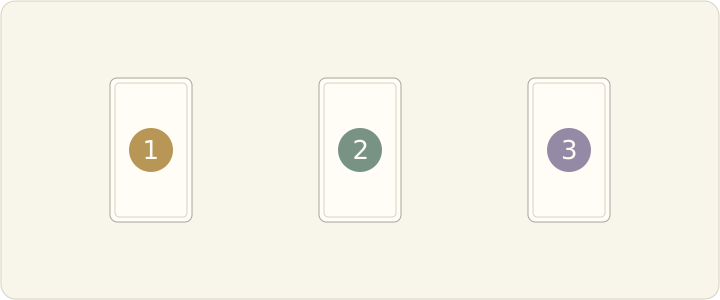
| What you want to explore | Card 1 | Card 2 | Card 3 |
|---|---|---|---|
| How something is developing | Past | Present | Future |
| What you could do next | Situation | Action | Outcome |
| How you feel today | Energy | Focus | Release |
| A moment of self-reflection | Mind | Body | Spirit |
Choose an approach before drawing. Then, as you look at each card, you have a question to begin with.
Past, present, future
This is an easy spread to remember. It follows three moments: what came before, where you are now and where things might go next.
- Past: consider an earlier experience, choice or habit that still has an influence.
- Present: notice what matters most right now, and how the first card connects with it.
- Future: if things continue this way, what could you look forward to or take care of in advance?
If something has stalled, there may be old concerns as well as preparation still to do. The third card gives you room to look ahead. Your choices can still change the direction.
Situation, action, outcome
Try this when your question is “What could I do next?” You might be preparing a conversation, learning something or returning to a task you have put off.
- Situation: what is happening, and which part have you not given much attention?
- Action: what could you try? A small, specific step is easier to begin.
- Outcome: what might change after that step, and what could need adjusting?
A card about waiting in the present position might bring to mind how long you have been paused. In the action position, it might invite you to rest before dealing with the issue. Its position gives the meaning a different direction.
Energy, focus, release: three cards for today
Sometimes you only want a moment to notice how your day is going. Begin with these questions:
- Energy: what mood and energy are you bringing to today?
- Focus: what deserves a little more time and care?
- Release: is there a pressure or expectation you could loosen?
Take a few minutes in the morning, or look back at the end of the day. Daily Tarot uses these three positions. You can also browse the daily card meanings as you read.
Mind, body, spirit: listen to what you need
Read the three cards as the thoughts you keep returning to, the pace your body needs and what gives your life a sense of meaning.
Perhaps you want to finish a project quickly, but feel worn out. Or you have been busy all day without doing something you enjoy. Looking at these three parts together can help you notice where you need a little care.
Draw your three cards
- Think of something on your mind. Put it into a question, such as “How could I make time for drawing this month?”
- Choose the three positions. Pick an approach above and keep a note beside you.
- Shuffle and draw three cards. Lay them left to right. Upright cards are a comfortable place to start.
- Notice what each card brings to mind. Begin with a detail in the picture, then explore the card library.
- Connect the cards in a few sentences. Which echo one another? Which pull in different directions? What small thing could you try?
Find somewhere you can sit quietly for a few minutes. Looking up meanings and taking notes as you go are all part of learning.
A reading example: making time for a drawing class
Suppose you have wanted to join an evening drawing class for a while. You keep looking at the course, but after work there are chores to do and you also want some rest.
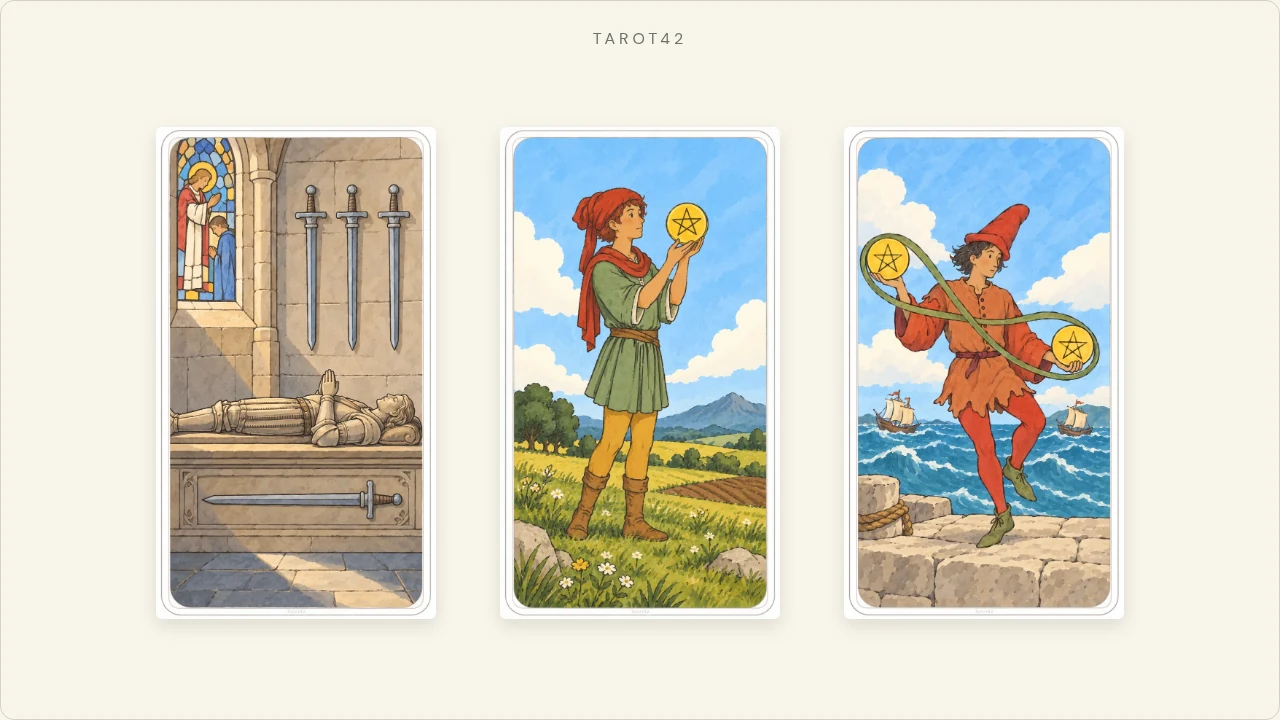
For the question “How could I make room for a drawing class this month?”, we have chosen the Four of Swords, Page of Pentacles and Two of Pentacles to show how a reading can come together. All three are upright, in situation, action and outcome order.
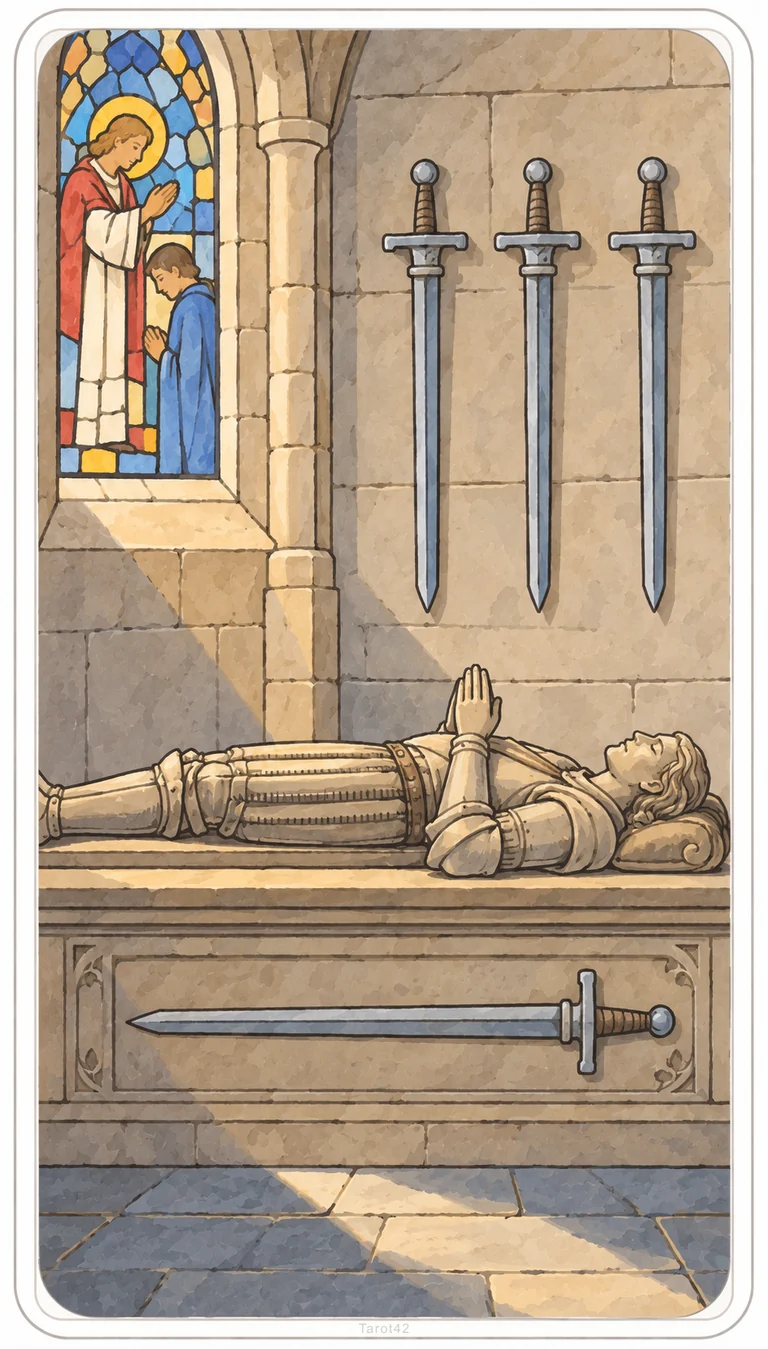
1. Four of Swords in the situation position
The resting figure can remind you that you need time to recover. Perhaps your interest in drawing has not faded; the little free time after work has simply been your chance to catch your breath.
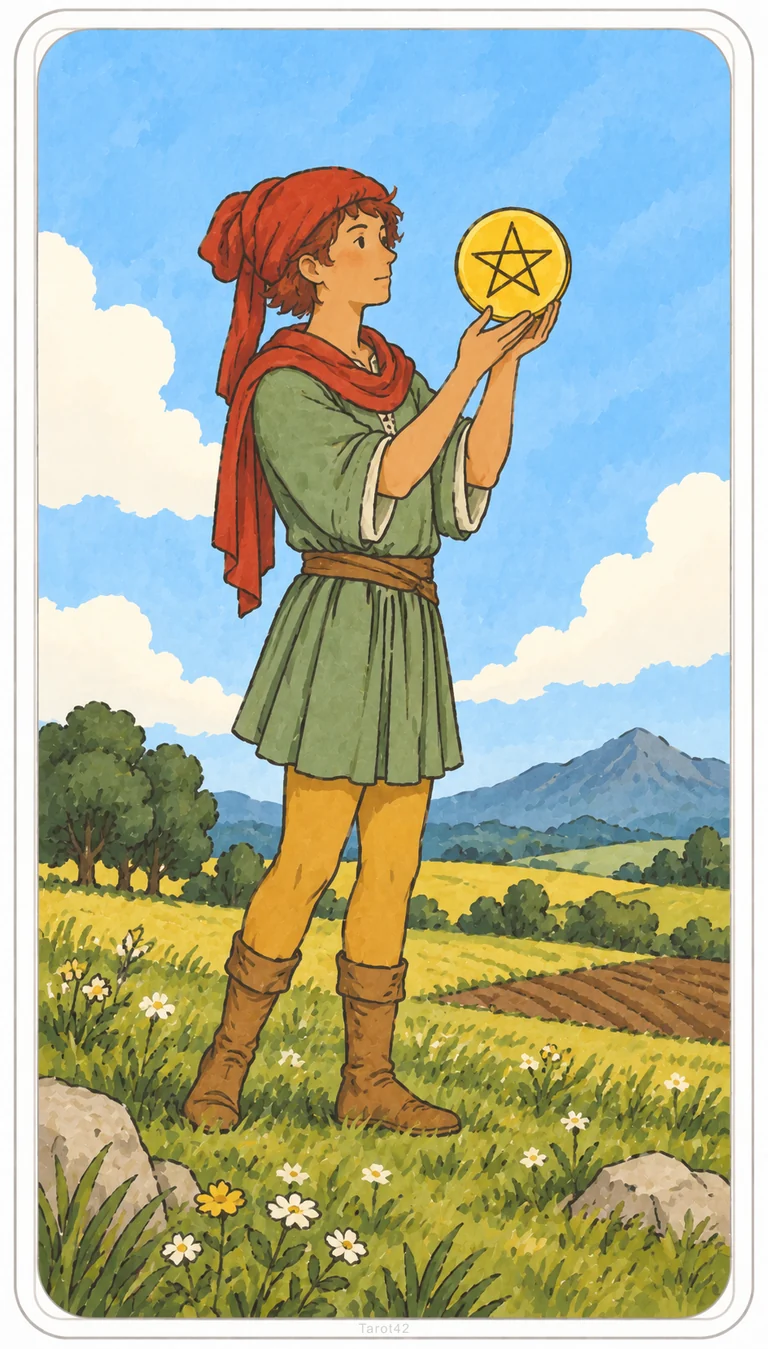
2. Page of Pentacles in the action position
The Page studies the pentacle with the attention of someone discovering an interest. Here, that could become a small beginning: ask about a trial class, take a few basic materials and draw for one evening.
Beside the Four of Swords, there is room for both needs. You can learn while keeping the first step small enough to leave time for rest.
3. Two of Pentacles in the outcome position
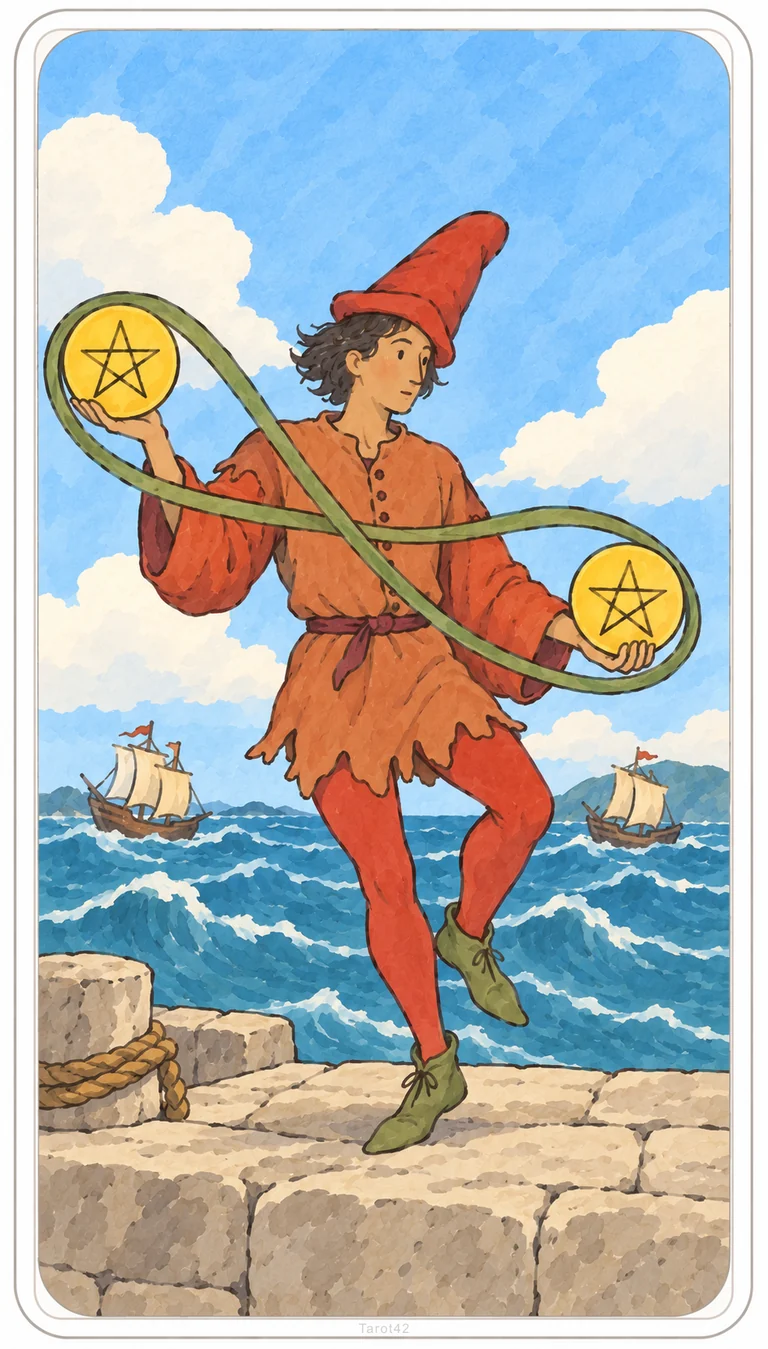
The figure balances two pentacles. A class would shift the week around: which chore could move, when could you get an early night and how much travel time would you need?
A small adjustment might be enough, or a trial could show that this month really is too busy. One evening can help you discover the pace you enjoy.
Bring the three cards together
The reading could become: “I want to learn to draw, and I also need rest. I could try one relaxed class, make a little space for that evening and see how I feel.”
Each card adds something: the Four of Swords brings attention to tiredness, the Page keeps your curiosity alive and the Two of Pentacles prompts you to think about your schedule. Sending a message about a trial class becomes a natural next step.
What changes if the same cards have different positions?
Try a short exercise with those same cards. What would change if you had chosen past, present, future before drawing?
| Card | Situation, action, outcome | Past, present, future |
|---|---|---|
| Four of Swords | A need for recovery in the current situation | An earlier rest or pause that may still matter |
| Page of Pentacles | A small, manageable learning step | A current interest or learning opportunity |
| Two of Pentacles | Adjustments after trying the class | Possible ways to balance different commitments |
The Page was answering “What could I do?” and now explores “What interests me now?” The card’s themes remain familiar; the position gives them somewhere different to land.
What if the cards seem to contradict each other?
Ask whether they could describe two needs you have at the same time. You can want to see someone and want an evening alone, or want to learn to draw and need a proper rest. Those feelings can exist together.
With reversals, consider where something feels blocked or overdone. A court card can describe an attitude, as the Page does in the example.
If you cannot connect a card yet, note the question. Return after a few days with some new experience and you may see more in it.
Questions to practice with
- Why have I kept putting this off, and what small step could I take?
- How could I begin a conversation I have wanted to have?
- Work has been tiring lately. What could I adjust?
- What deserves care today, and what could I let go of?
- Where could I begin learning something that interests me?
- What do I enjoy in this friendship, and what have I left unsaid?
Take a familiar question into the love spreads, or compare two options with the five-card decision spread.
Keep a note of your reading
If you enjoy writing as you read, download the three-card worksheet (PDF). Keep your question, cards and thoughts on one page to revisit later.
Common questions
Is the middle card always the most important?
It depends on the spread. In a timeline, it describes the present; in situation, action, outcome, it explores an action. Read all three and notice which speaks to you most.
What if I only know the Major Arcana?
Start with those 22 cards. Add the Minor Arcana as you learn them and you will find more details that speak to everyday life.
When can I ask the same question again?
Give this reading a little time. Try the small step you thought of, then return when you have a new feeling, experience or question to bring.